Travel guide
A long weekend in Marrakech, and the medina navigation problem
Four days, one riad, and the realisation on the first afternoon that the map on your phone is confidently wrong about which alleys connect.
By TripSake travel desk · Published · Updated · 12 min read
- Trip length
- 4 nights, Thursday to Monday
- Group
- 4 people, none had been to Morocco
- Base
- One riad in the medina, near Riad Zitoun
- Booked ahead
- 2 timed sights, 1 hammam, 1 day trip
- Daily walking
- 7 to 12 km
- Season
- Mid March, 12 degrees at night, 25 at midday
The short answer
Four days in Marrakech works as two days in the medina, one day in the new city and gardens, and one day out in the Atlas or the Agafay desert. Stay in a riad inside the walls, book the Bahia Palace and Yves Saint Laurent museum slots, and plan every medina day around landmarks rather than street names, because phone navigation does not work reliably inside the old city.
What to take away
- GPS inside the medina is unreliable. Navigate between named gates and squares, not turn by turn.
- Stay in a riad inside the walls. The door looks like nothing and the inside is the point.
- The souks are best in the morning and worst at 17:00, in every sense.
- A day in the Atlas is six hours of the day spent in a car and valley. Budget it as a full day.
- Agree a taxi price before getting in, every single time, without exception.
The medina does not work the way your phone thinks it does
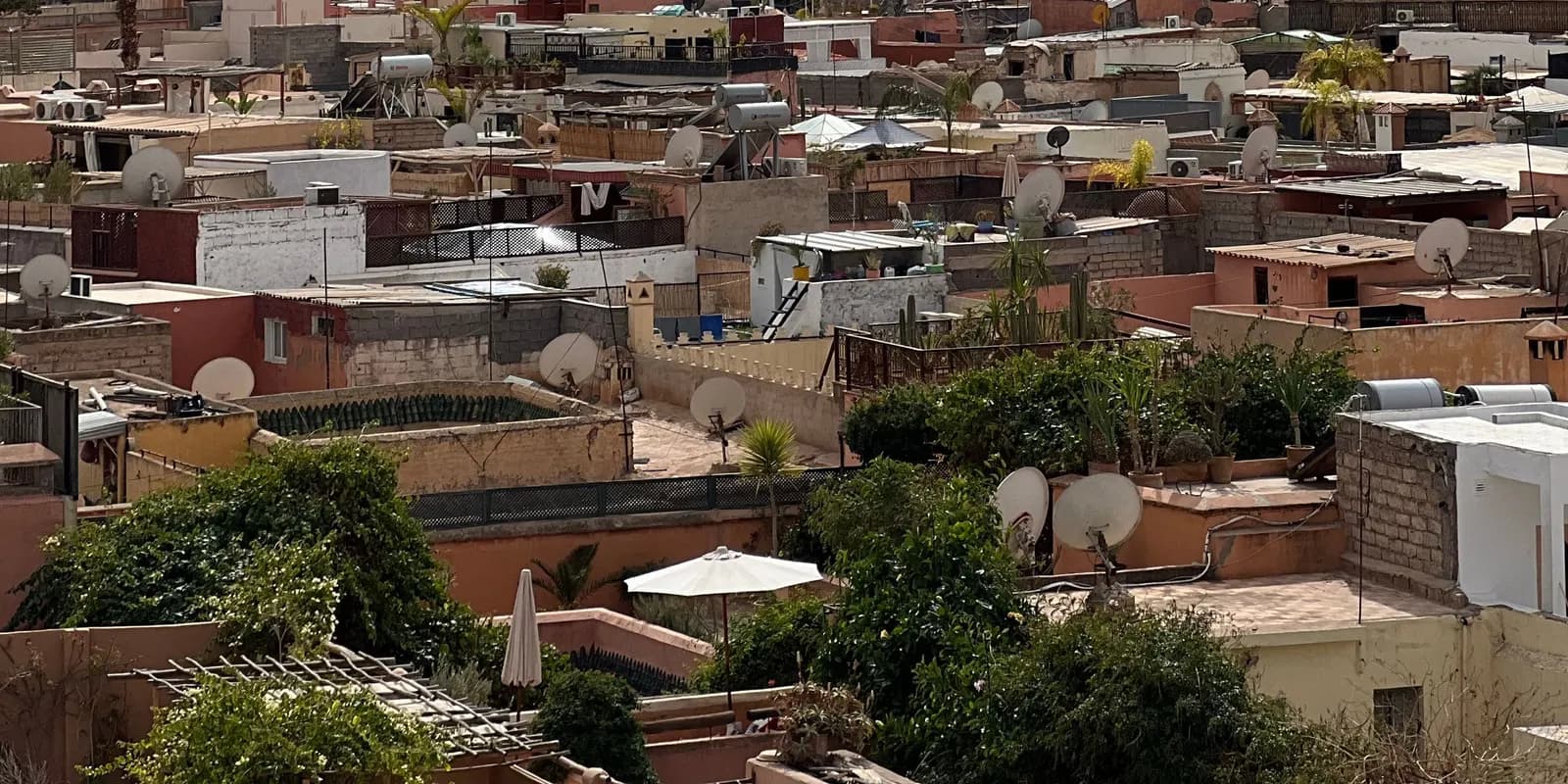
The old city is a few square kilometres of alleys, many of them unnamed, some of them covered, and a good number of them ending in a wall or a private door. Phone navigation shows a route through them with total confidence and is wrong often enough that following it turns a ten minute walk into forty.
This happened to us within an hour of arriving. Four people, three suitcases, one blue line on a screen and a dead end containing a man with a cart, twice.
What works is landmark navigation. The medina has fixed points that everyone knows: the gates, Jemaa el-Fnaa, the Koutoubia minaret, the main souk arteries. Plan a walk as a sequence of those and use the alleys between them freely, because the small streets almost all lead back to a big one eventually. We rebuilt every medina day around this and never got properly lost again.
- Learn four landmarks on day one: Jemaa el-Fnaa, Koutoubia, Bab Doukkala, Riad Zitoun el Jdid.
- Screenshot the riad location and the nearest gate. Signal drops in covered souks.
- A guide for the first afternoon costs little and pays for itself in orientation.
- If you are lost, walk uphill in noise. Busy alleys lead to squares, quiet ones lead to doors.
Riad or hotel, and why the answer is riad
A riad is a house built inward around a courtyard, usually with a roof terrace and no external windows. From the alley it is an unmarked door in a wall. Inside it is tiled, quiet and about fifteen degrees cooler than the street.
For four people this was the correct choice by a distance. We had the whole house, breakfast on the terrace, and somewhere to retreat to at 15:00 when the medina becomes hard work. The new city hotels are more comfortable in a conventional way and put you twenty minutes and a taxi away from everything you came for.
Two practical notes. Check that the riad is reachable, some are a five minute walk from the nearest point a taxi can reach, and someone will usually meet you at the gate if you tell them when you are arriving. And ask for the terrace: it is where the evening happens, and the call to prayer across the rooftops at dusk is the thing I would go back for.
The souks, and what to do about the prices
The souks are a genuine working market, not a tourist reconstruction, and the further north you go from Jemaa el-Fnaa the more of it is aimed at people who live here. Around the square it is lamps and leather; twenty minutes in you find dyers, metalworkers and the wool market.
Haggling is expected on crafts and normal on almost anything without a printed price. The opening number is usually two to four times what the item goes for. Decide what you would pay before asking, say it once, and be willing to walk away without any drama.
Two things we did not know beforehand. The morning is the calm version of the souk and the late afternoon is the intense one. And if you say yes to being led somewhere, you are typically going to a shop that pays a commission, which is not a scam so much as an economy, but it means you will not end up where you thought you were going.
The sights worth the ticket
Bahia Palace is the one to do properly. Nineteenth-century, a sequence of courtyards and painted ceilings, and it is beautiful early and full by 11:00. Around 10 euros equivalent and worth booking a slot.
The Yves Saint Laurent museum and the Jardin Majorelle share a site in the new city and sell timed entry that regularly goes out days ahead. The garden is small, extremely photographed and still striking; the museum next door is better and much quieter.
Ben Youssef Madrasa reopened after a long restoration and is now the most impressive interior in the medina, a fourteenth-century student college around a courtyard of carved cedar and tile. El Badi Palace is the opposite: a vast ruin with storks nesting on the walls, and it works precisely because there is nothing left to look at except scale.
The day out: Atlas, Ourika or Agafay
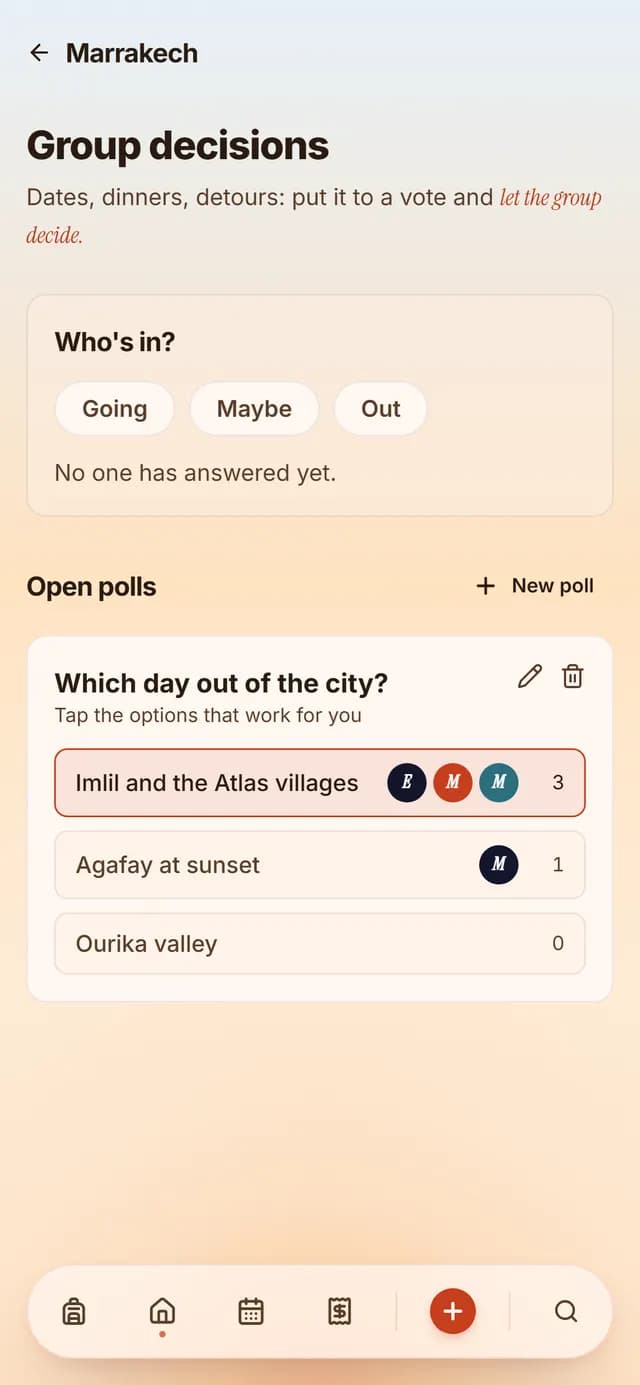
Three versions of this day get sold on every street. The Atlas villages and Imlil is the mountain one, about 90 minutes each way, walking in a valley with a mule track and a village lunch. Ourika valley is closer, greener, and much busier at weekends because it is where Marrakech goes. Agafay is stony desert forty minutes out, sold as "the desert" and best at sunset with dinner.
The Sahara is not a day trip. Merzouga is roughly nine hours each way by road and any tour selling it as an overnight from Marrakech is selling you two very long days in a minibus.
We did Imlil and it took the whole day, about seven hours door to door with four hours on the ground. Worth it. Bring shoes with grip, and be aware that a mule and a guide will be offered at the trailhead, which is fine, agreed in advance, like everything else here.
The evening on the square
Jemaa el-Fnaa at 19:00 is a food market with a hundred numbered stalls, smoke, drummers, orange juice carts and men with monkeys and snakes, and it is intense in a way photographs do not convey. It is also, unavoidably, the most touristed place in the country.
It is still worth doing once, and the trick is the rooftop cafes around the edge. Sitting above it with a mint tea for the twenty minutes when the light goes and the smoke rises is one of the better sights in Morocco, and it costs the price of a drink.
Avoid the animal photos, which are a welfare problem, and expect to pay for any picture with a person in it. Eat at the numbered stalls if you like, or eat better fifty metres away and come back for the atmosphere.
Day by day
Four days in Marrakech, landmark by landmark
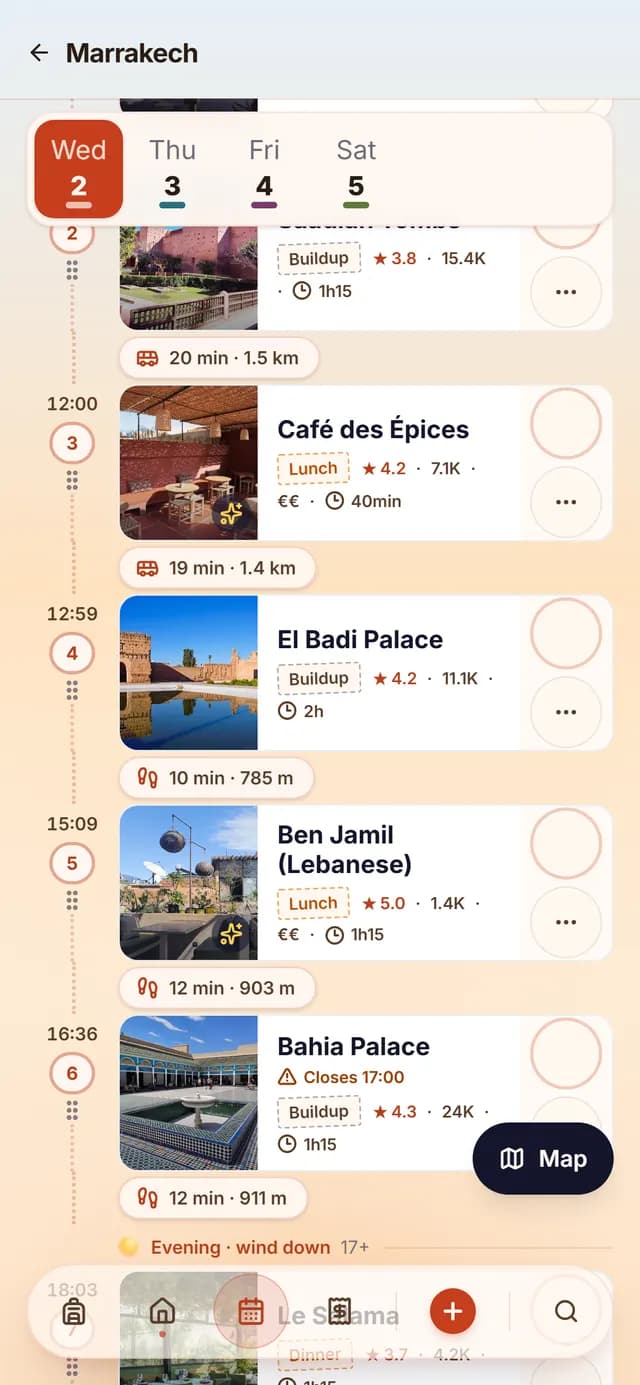
The plan as it ran after the first lost afternoon. Medina days are built between fixed landmarks, the new city is one taxi ride and one day, and the Atlas day owns a whole day rather than half of one.
Day 1
Arrival and orientation
The southern medina, on foot7.3 km on foot
- 14:00
Riad check-in, mint tea on the terrace
Hotel · 1h
Tell them your arrival time. Someone meets you at the nearest point a taxi can reach, which saves the walk we did with suitcases.
- 15:30
Koutoubia mosque exterior and gardens
Sight · 45m
Free. Non-Muslims cannot enter, and the minaret is the landmark you will navigate by for four days.
- 16:30
Walk the southern medina
Walk · 1h 30m
Riad Zitoun el Jdid and el Kdim, the two main north-south arteries. Learn these and the area makes sense.
- 18:30
Rooftop above Jemaa el-Fnaa
Coffee · 1h
The price of a mint tea for the best view of the square as the food stalls set up.
- 20:00
Dinner in the medina
Food · 2h
Fifty metres off the square the food improves and the price halves.
Verdict. Spend the first afternoon learning the shape of the place. Everything else is easier afterwards.
Day 2
Palaces, madrasa and the souks
Medina, entirely on foot11.6 km on foot
- 09:00
Bahia PalaceBooked
Sight · 1h 30m
Around 10 euros equivalent, timed. At opening it is quiet and by 11:00 it is a queue of tour groups in each courtyard.
- 11:00
El Badi Palace
Sight · 1h
A ruin the size of a stadium with storks nesting on the walls. Nothing to see and completely worth it.
- 12:30
Lunch, Kasbah district
Food · 1h 30m
Away from the palace gates the prices drop sharply.
- 14:30
Saadian Tombs
Sight · 45m
Small, ornate, and a bottleneck: one narrow room everyone queues for. Go on the way past rather than as a destination.
- 16:00
Souks, north from the square
Walk · 2h 30m
Head towards the dyers and the metalworkers. The further from Jemaa el-Fnaa, the less of it is aimed at you.
- 19:00
HammamBooked
Open · 1h 30m
Booked. A public hammam costs a couple of euros and is an experience; a riad hammam is calmer and costs more.
- 21:00
Dinner, medina
Food · 2h
Most riads will cook if you ask in the morning, which after a souk day is the right answer.
Day 3
The Atlas, all day
Imlil, 90 minutes each way9.8 km, mostly uphill on a valley track
- 08:00
Drive to ImlilBooked
Travel · 1h 30m
Booked with a driver rather than a coach tour. Roughly the same price split four ways and it goes at your pace.
- 09:45
Walk up the valley from Imlil
Walk · 3h
Mule tracks between Berber villages. A guide and a mule are offered at the trailhead. Agree the price first.
- 13:00
Lunch in a village house
Food · 1h 30m
Tagine on a terrace at 1800 metres. This is the part of the day everyone talks about afterwards.
- 15:00
Descent and tea
Walk · 1h 30m
Downhill the whole way, which at that altitude is the correct direction after lunch.
- 17:00
Drive back
Travel · 1h 30m
Back in the medina by 18:30 with nothing planned, which was deliberate.
Verdict. A full day, not a morning. Seven hours door to door and worth every one of them.
Day 4
The new city and the gardens
Gueliz and Majorelle, taxi out and walk back8.9 km on foot
- 09:30
Jardin MajorelleBooked
Sight · 1h
Timed entry, often sold out days ahead. Small, blue, and photographed more than any garden needs to be.
- 10:45
Yves Saint Laurent museumBooked
Sight · 1h 15m
Next door, better than the garden and about a fifth as busy.
- 12:30
Lunch in Gueliz
Food · 1h 30m
The new city eats differently: cafes, wine lists, and a completely different crowd from the medina.
- 14:30
Le Jardin Secret or Menara gardens
Sight · 1h 30m
Le Jardin Secret is back in the medina and small. Menara is a large olive grove and a pool, mostly used by families.
- 17:00
Last walk through the souks
Walk · 1h 30m
Buy on the last day, when you know what things cost.
- 19:30
Jemaa el-Fnaa food stalls
Food · 2h
The numbered stalls, once, at the end, when the square is no longer intimidating.
Menara airport is fifteen minutes from the medina and the taxi price is fixed but not always offered as such. Agree it before the bags go in. Coming from the medina, walk out to the nearest gate rather than expecting a car at the riad door.
Honest comparison
Wanderlog, a Maps list and a group chat full of reels
Marrakech breaks the standard planning tools in a specific way: the addresses do not resolve. Half the places worth going to are a door in an unnamed alley, and a pin dropped on a map has a fifty metre error that matters when fifty metres is three walls and a covered passage.
We had thirty-something saved reels between four people, most of them rooftops and courtyards with no name attached to them at all.
| What | Wanderlog, TripIt, Maps lists | TripSake |
|---|---|---|
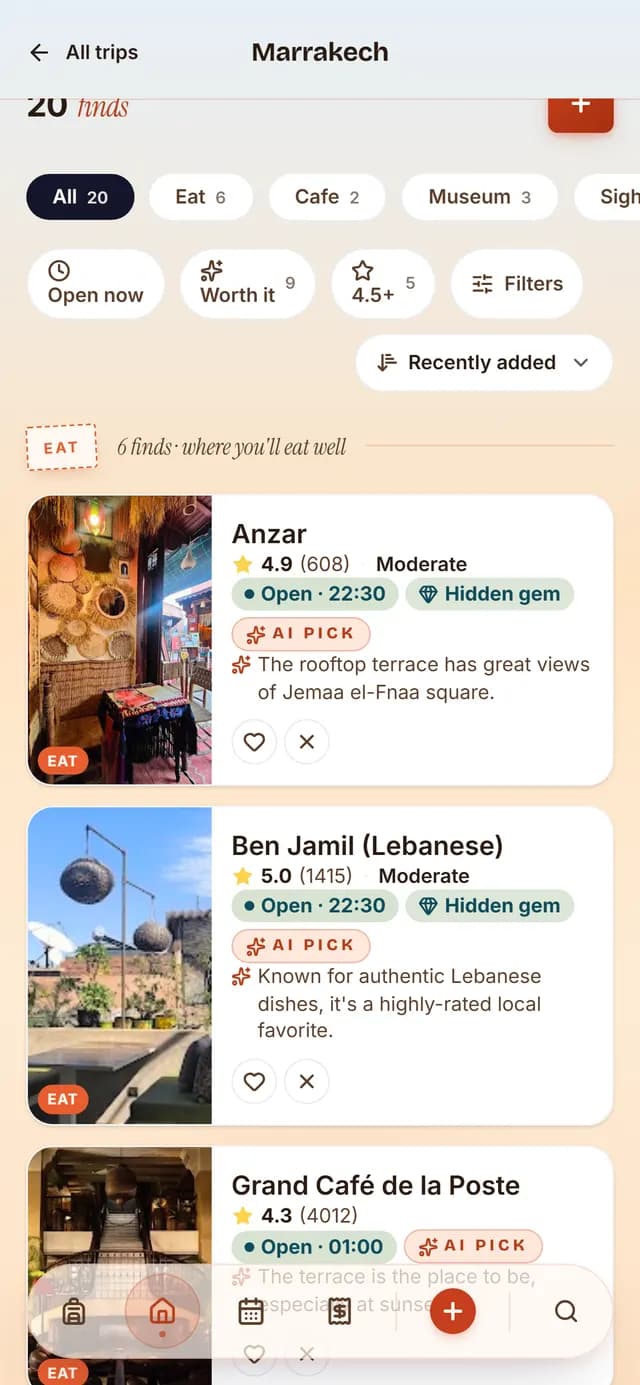
| Saved videos into places | Wanderlog and Google Maps need a name typed in. A clip of a courtyard with a caption saying "Marrakech" gives you nothing to type. | Paste the link and the places shown or mentioned are identified and pinned with photos, ratings, price level and opening hours, with the video attached so the pin still makes sense a month later. |
| Navigating a medina | Turn by turn directions through alleys that do not connect the way the map believes they do. | The day is grouped by area with landmarks as anchors, so you walk between fixed points instead of trusting a blue line through a covered souk. |
| Opening hours that matter | Stored if someone types them in. Nothing checks whether your 09:00 stop opens at 09:30. | The plan is built from real opening hours and flags a stop that would land while a place is closed, which in a city with Friday closures is not a small thing. |
| Four people, one souk tolerance | Shared editing, and the disagreement surfaces at 17:00 in the busiest alley in the city. | Yes or no per spot and polls for the real decisions. Ours was "Atlas or Agafay", settled in five minutes. |
| No signal under a covered souk | Offline maps are usually a paid feature. | The plan, the spots and the map work offline at no cost, which inside the medina is the difference between having a plan and not. |
| Cash, and four people | A separate splitting app, remembered on day three, with most of the cash payments already forgotten. | Expenses live in the trip with the same member list, and a photographed receipt fills in its own amount. |
| What it costs | An annual subscription, and one person in the group paying it for everyone. | Free, with no subscription and no premium tier. |
Marrakech is the trip where a saved folder of beautiful rooftops is least useful, because none of them have names and none of them are where you think they are. Turning that folder into pins with addresses is most of the planning work, and it is the part nobody wants to do by hand.
Questions travellers ask
Before you book
How many days do you need in Marrakech?
Four is right: two days in the medina, one in the new city and gardens, and one full day in the Atlas or Agafay. Three works if you drop the day trip, but the day trip is the best day.
Should I stay in a riad or a hotel?
A riad inside the medina, particularly for a group. You get a whole house around a courtyard, a roof terrace and a quiet place to retreat to in the afternoon. New city hotels are more conventional and put you a taxi ride from everything.
Is it easy to get lost in the Marrakech medina?
Yes, and phone navigation is unreliable inside it because many alleys are unnamed, covered or do not connect the way maps show. Navigate between landmarks like Jemaa el-Fnaa, the Koutoubia minaret and the main gates.
Can you do a Sahara desert trip from Marrakech in a day?
No. Merzouga is around nine hours each way by road. The day trips sold as "desert" are Agafay, which is stony desert forty minutes out and pleasant at sunset, and it is not the Sahara.
Do I need to book Marrakech attractions in advance?
Jardin Majorelle and the Yves Saint Laurent museum sell timed entry that often goes days ahead. Bahia Palace is worth a booked morning slot. Most other sights can be walked into.
How do I turn saved reels of Marrakech riads into a plan?
Paste the links into a TripSake trip. Each clip is read for the places it shows or names, and those become map pins with an address, photos and opening hours, which is the step that is otherwise impossible when the video never says where it was filmed.
About the author
The TripSake travel desk plans and walks the routes we publish. This one was four people over a March long weekend, and the first afternoon was spent lost, which is why the rest of it is organised the way it is.
Keep reading